e-Learning: Using administrative data to produce official statistics, 06 April to 08 May 2026
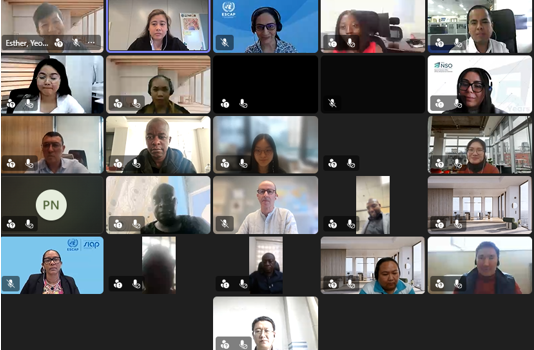
SIAP, in partnership with the United Nations Statistics Division (UNSD) and the Collaborative on Administrative Data (CAD), conducted the second iteration of the e-learning course on administrative data. The course provides an overview of administrative data, including key data quality issues and institutional mechanisms to support its use in the production of official statistics. The course targeted staff from institutions involved in the collection, processing, and storage of administrative data, as well as those engaged in producing official statistics using such data....here
|
|
|
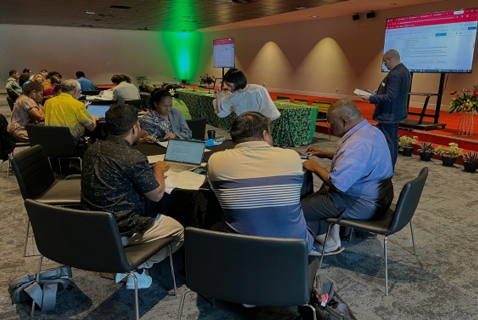
Pacific SIDS Energy Statistics Training Workshop, 29 April to 1 May 2026, Port Moresby, Papua New Guinea
The event, organized by the United Nations Department of Economic and Social Affairs, the United Nations Statistical Institute for Asia and the Pacific in collaboration with the Pacific Community, aimed to accelerate the region's renewable energy transition and build national capacities to produce and disseminate high-quality energy statistics. The 3-day event took place on the margins of the Sixth Pacific Regional Energy and Transport Ministers Meeting.
|
|
|
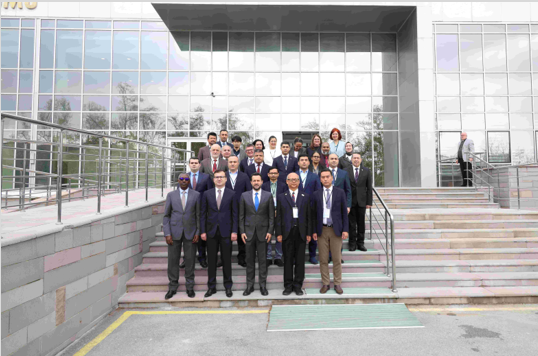
Enhancing Statistical Leadership for Heads of National Statistics Offices in Asia and the Pacific to foster Data Innovation in a Digital Society, 06 to 08 May 2026, Ankara, Türkiye
SIAP conducted the workshop in collaboration with the Partnership in Statistics for Development in the 21st Century (PARIS21) and the Turkish Statistical Institute (Turkstat). 13 Chief/Deputy Chief Statisticians from 9 countries (Azerbaijan, India, Kazakhstan, Maldives, Sri Lanka, Tajikistan, Türkiye, Turkmenistan, Uzbekistan) joined the workshop and strengthen their leadership skills ....here
|
|
|
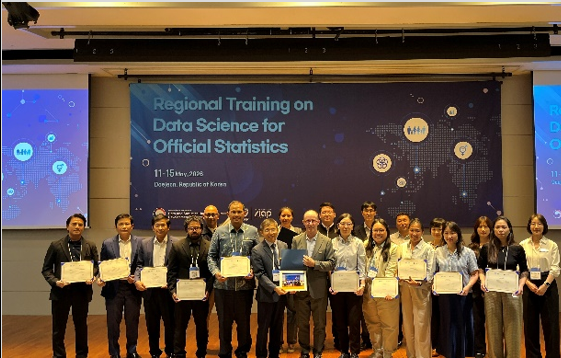
Regional Training on Data Science for Official Statistics, 11 to 15 May 2026, Daejeon, Republic of Korea
The Statistical Institute for Asia and the Pacific (SIAP) and the Ministry of Data and Statistics (MODS) are organizing a Regional Training on Data Science for Official Statistics, recognizing both the opportunities and the challenges associated with integrating Data Science methods and tools into NSO processes.
The overall objective of the week-long training is to build the capacity of NSOs to integrate Data Science methods into the production of Official Statistics. It seeks to strengthen participants’ skills in handling, analyzing, and visualizing data sources, with a particular focus on reproducible methods and tools for monitoring and reporting Official Statistics and Sustainable Development Goals (SDGs) indicators. 14 participants from 9 countries (Indonesia, Philippines, Maldives, Kyrgyzstan, Cambodia, Lao PDR, Malaysia, Mongolia, Viet Nam) joined....here
|
|
|
Upcoming and Ongoing Events |
|
|
|
Regional Course on Crime Statistics from a Gender Perspective, 15 to 19 June 2026
Across Asia and the Pacific, violence against women and girls is taking increasingly complex and lethal forms—from gender-related killings (femicide/feminicide) to rapidly evolving technology-facilitated abuse—yet both remain insufficiently measured due to persistent gaps in definitions, reporting, and integrated data systems.
In 20241, at least 17,400 women and girls in Asia were killed by an intimate partner or family member—approximately 48 every day—according to joint United Nations Office on Drugs and Crime (UNODC) and United Nations Entity for Gender Equality and the Empowerment of Women (UN Women) estimates. While this represents a decline from the previous year, it does not signal true progress. Instead, it reflects ongoing weaknesses in national data and reporting systems, including incomplete identification and classification of femicide and limited capacity to capture gender-related motives...here
|
|
|
e-Learning : Compiling climate change indicators: an accounting approach, 15 June to 17 July 2026
Climate change is one of the most pressing issues of our time. Its impacts on well-being are far reaching, including impacts on health and the economy. Humans have contributed to climate change largely through economic activities which are intrinsically linked to climate change. Our supply and use of energy for example has led to increased emissions of greenhouse gases which have resulted in global warming. A better understanding of the relationship between the economy and climate change through the compilation of relevant indicators is key to mitigating and adapting to climate change....here
| |
International Workshop on SEEA Ecosystem Accounting for Climate Change and Biodiversity, 04 to 07 August 2026, Chiba, Japan
International Workshop on SEEA Ecosystem Accounting for Climate Change and Biodiversity, 04 to 07 August 2026, Japan
The System of Environmental-Economic Accounting (SEEA) provides the agreed upon statistical framework for measuring the relationship between the environment and the economy. It is comprised of two complimentary international statistical standards: the SEEA Central Framework (SEEA CF) and the SEEA Ecosystem Accounting (SEEA EA). The SEEA CF takes a resource-based approach to measuring the supply and use of environmental resources and availability of environmental assets. The SEEA EA takes a holistic and spatially explicit approach to compiling accounts on ecosystems....here
|
|
|
Regional Training Course on Poverty Measurement and Statistics (SDG 1.2), 24 to 28 August 2026, Daejeon, Republic of Korea
Effective measurement of poverty is essential for understanding the scale, depth and distribution of deprivation, and for designing policies that respond to the needs of the poorest and most vulnerable. Accurate, timely, and comparable poverty statistics enable governments to better target interventions, monitor progress, and assess the impact of economic and social shocks. In the context of the Sustainable Development Goals, particularly SDG 1 (No Poverty), robust poverty measurement is indispensable for ensuring that policy responses are evidence-based and effective. Consistent methodologies and measurements across countries and population groups are critical for producing reliable poverty estimates and for SDG monitoring. In this regard, the World Bank’s revision of the international poverty line in 2025, from USD 2.15 to USD 3.00 per person per day, to align with the 2021 purchasing power parities (PPP) and updated global price data represented an important development. ...here
|
|
|
Regional Workshop on Measuring Natural Resources in the National Accounts, 01 to 04 September 2026, Chiba, Japan
In many countries natural resources—such as mineral and energy resources, timber, land, water, and aquatic resources—play a central role in supporting economic development. The management of natural resources is also relevant to sustainable development and long‑term economic resilience. As countries increasingly prioritize green growth, low‑carbon transitions, and efficient resource management, the demand for high quality and timely statistics on natural resource stocks and flows continues to rise. The main statistical frameworks for measuring natural resources are the System of National Accounts (SNA) and the System of Environmental-Economic Accounting (SEEA)....here
|
|
|
Consumer Price Index Compilation Methods,05 to 09 October 2026, Chiba, Japan
CPIs measure changes over time in the general level of prices of goods and services that households acquire (use or pay for) for the purpose of consumption. In many countries, they were originally introduced to provide a measure of the changes in the living costs faced by workers, so that wage increases could be related to changing levels of prices. However, over the years, CPIs have widened their scope and now are widely used as a macroeconomic indicator of inflation...here
|
|
|
SIAP E-learning System
SIAP offers a range of e-learning courses across the domains of social, environment and economic statistics; data science; and statistical principles and methodologies. These courses are facilitated and supported by an expert in the field to the participants through regular communication in discussion box and through webinar(s) during the period of course delivery. A certificate is issued to successful participants completing the course after passing the prescribed examination.
|
|
|
|
|
|
|