e-Learning: Energy statistics and balances, 19 January to 06 March 2026
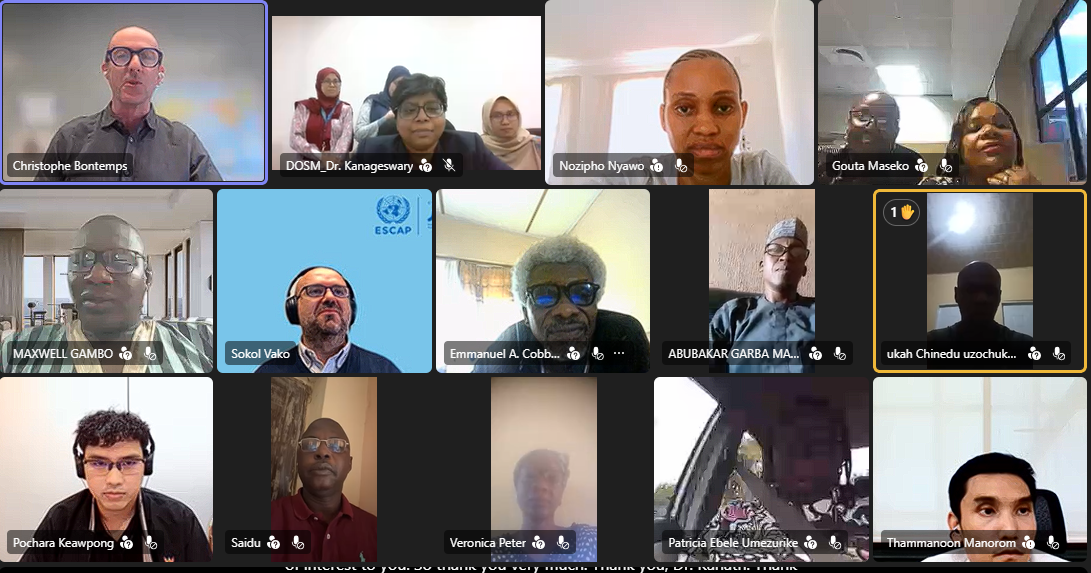
The Energy Statistics and Balance course, which ran from 19 January to 6 March, attracted a total of 262 participants, with around 150 completing the course. Energy is fundamental for socio-economic development. The availability of and access to energy is particularly essential to poverty reduction and further improvements in standards of living. However, with the constantly increasing demand for energy, there are growing concerns about the sustainability and reliability of current production and consumption patterns and the impact of the use of fossil fuels on the environment. Under these circumstances, the reliable and timely monitoring of the supply and use of energy becomes indispensable for sound decision making. Such monitoring is only possible with high quality energy statistics that are systematically compiled and effectively disseminated. This is recognized by the international community with the inclusion in the Sustainable Development Goal (SDG) of a dedicated goal on energy (SDG 7)...here
|
|
|
e-Learning: Increasing engagament around data and statistics, 9 February to 13 March 2026.
Identifying and responding to the needs of users for data and statistics is at the heart of the mission of National Statistical Offices (NSOs) and national statistical systems. NSOs already undertake many activities interacting with different users such as preparing press releases to aid journalists and communicate with the public at large and organizing launch events/workshops to disseminate important results from surveys and censuses. In general, the NSO interacts with users towards...here
|
|
|
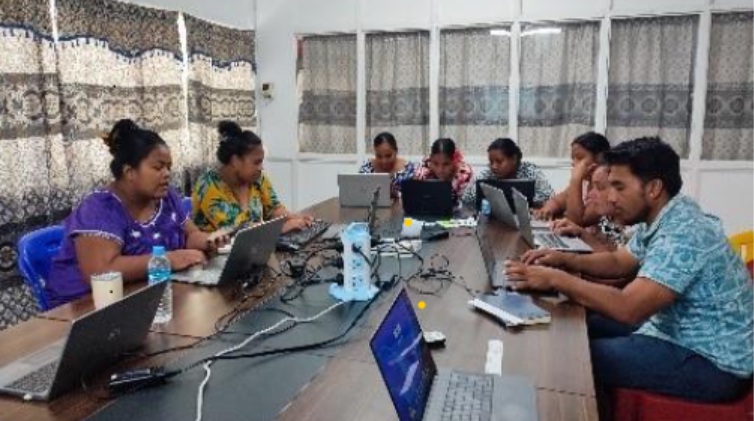
Training on Supply and Use Tables, 2–5 March 2026, Kiribat The Statistical Institute for Asia and the Pacific conducted a training for technical staff of the Kiribati National Statistics Office to present the conceptual framework and practical guidance in compiling Supply and Use Tables. The training covered lectures on concepts and definitions, data sources, compilation challenges, and practical hands-on estimation exercises. |
|
|
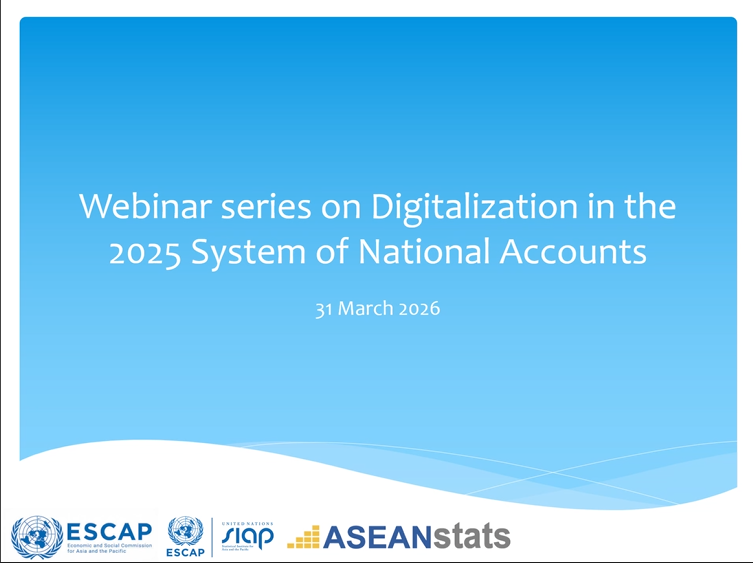
Digitalization in the 2025 System of National Accounts, 17 March to 07 April 2026
This webinar series builds on outreach missions of the Intersecretariat Working Group on National Accounts and Advisory Expert Group members and regional commissions to increase awareness on the developments in the 2025 SNA. This activity is a collaboration among the Economic and Social Commission for Asia and the Pacific, through the Statistics Division and Statistical Institute for Asia and the Pacific (SIAP), the Statistics Division of the ASEAN Secretariat, UN Statistics Division, and the Statistics Department of the International Monetary Fund. It aims to contribute to advancing regional dialogue on the complexities of measurement of digitalization and better understanding of methodological approaches.....here
|
|
|
< Upcoming and Ongoing Events |
|
|
|
e-Learning: Using administrative data to produce official statistics, 06 April to 08 May 2026
National statistical systems are increasingly using administrative data to compile official statistics. Such data can be utilized to better meet the increasing demands for new statistics and indicators that are highly disaggregated. Administrative data is not collected for the primary purpose of compiling official statistics, and statisticians need to ensure that the data meets certain criteria before using it to produce official statistics. This course provides an overview of administrative data, a discussion of data quality issues and institutional mechanisms to ensure that administrative data can be used in the production of official statistics. The course builds upon content developed for in-person training courses conducted by United Nations Statistics Division (UNSD) and to which members of the Collaborative on Administrative Data have provided valuable input...here
|
|
|
Pacific SIDS Energy Statistics Training Workshop, 29 April to 01 May 2026
The United Nations Statistical Institute for Asia and the Pacific (SIAP) and the United Nations Statistics Division (UNSD), in cooperation with the Department of Economic and Social Affairs (DESA) Small Island Developing States (SIDS) Unit and the Secretariat for the Pacific Community, are organizing an Energy Statistics Training Workshop for Pacific SIDS. The Workshop will be held in Port Moresby, Papua New Guinea from 29 April – 1 May 2026. The Workshop will be an opportunity for data providers, policy makers and others to come together to accelerate the region’s renewable energy transition. The workshop will build national capacity to produce, disseminate and use high-quality energy statistics to monitor progress. The Workshop will be held in conjunction with the Pacific SIDS Regional Symposium: Transition towards 100% renewable energy. The Symposium will strengthen capacity and catalyse investment in renewable energy systems in the region through scalable pilot initiatives and SIDS-SIDS peer learning.
|
|
|
Regional Training on Data Science for Official Statistics, 11 to 15 May 2026
In recent years, the data landscape has evolved rapidly, creating for National Statistical Offices (NSOs) both significant opportunities for innovation and important challenges in maintaining data quality and reliability. In response to these developments, the Statistical Institute for Asia and the Pacific (SIAP) and the Ministry of Data And Statistics (MODS) are organizing a Regional Training on Data Science for Official Statistics, recognizing both the opportunities and the challenges associated with integrating Data Science methods and tools into NSO processes...here
|
|
|
SIAP E-learning System
SIAP offers a range of e-learning courses across the domains of social, environment and economic statistics; data science; and statistical principles and methodologies. These courses are facilitated and supported by an expert in the field to the participants through regular communication in discussion box and through webinar(s) during the period of course delivery. A certificate is issued to successful participants completing the course after passing the prescribed examination.
|
|
|
|
|